Level 02 · Case study
Leboret website
Designer, front-end and partner · 2026
A conversion-first redesign of the Shopify store of a Mexican perfume brand, built around making it easy to buy a set of three.
Context
Leboret is a Mexican perfume e-commerce brand built on Shopify, and each fragrance launches with its own visual world. I started as the brand's freelance designer about two years ago and became a partner in March 2026, when I began running the business. I designed the store for conversion first, so some choices favor clarity over visual flair.
- The offer
- Buying more lowers the price per bottle, so the store is built to sell sets.
Problem
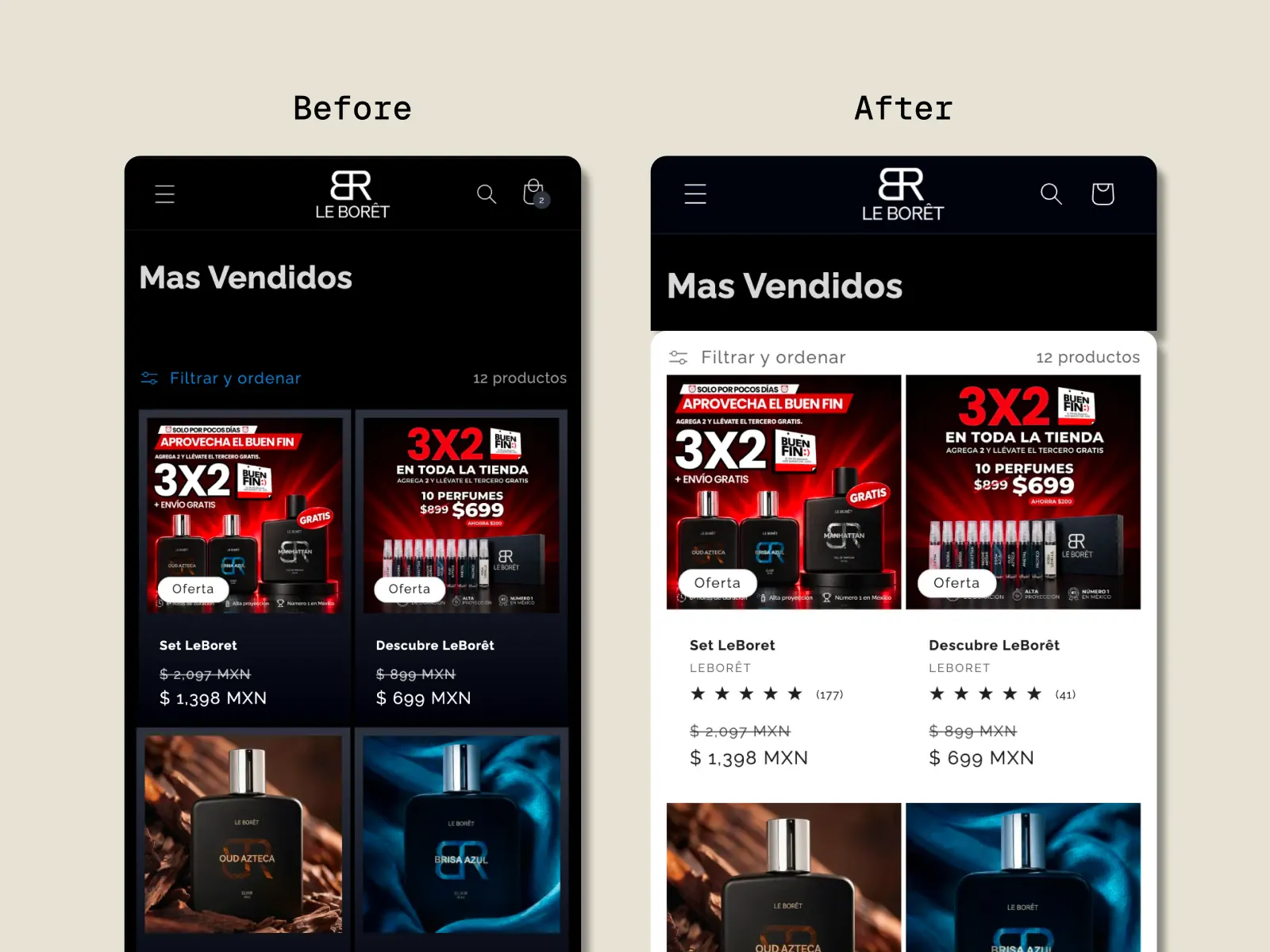
To get the set discount, a shopper had to open each perfume page and add the bottles one by one. The product list was also visually heavy.
- Before
- In regular months, about 0.5% of sessions ended in a purchase (Shopify, Jul to Sep 2025).
My role
I designed the site in Figma and coded it on top of a Shopify theme, working from my IDE through GitHub. As a partner I also handle ads, email and operations, so I see what each design change does to sales.
- Custom code
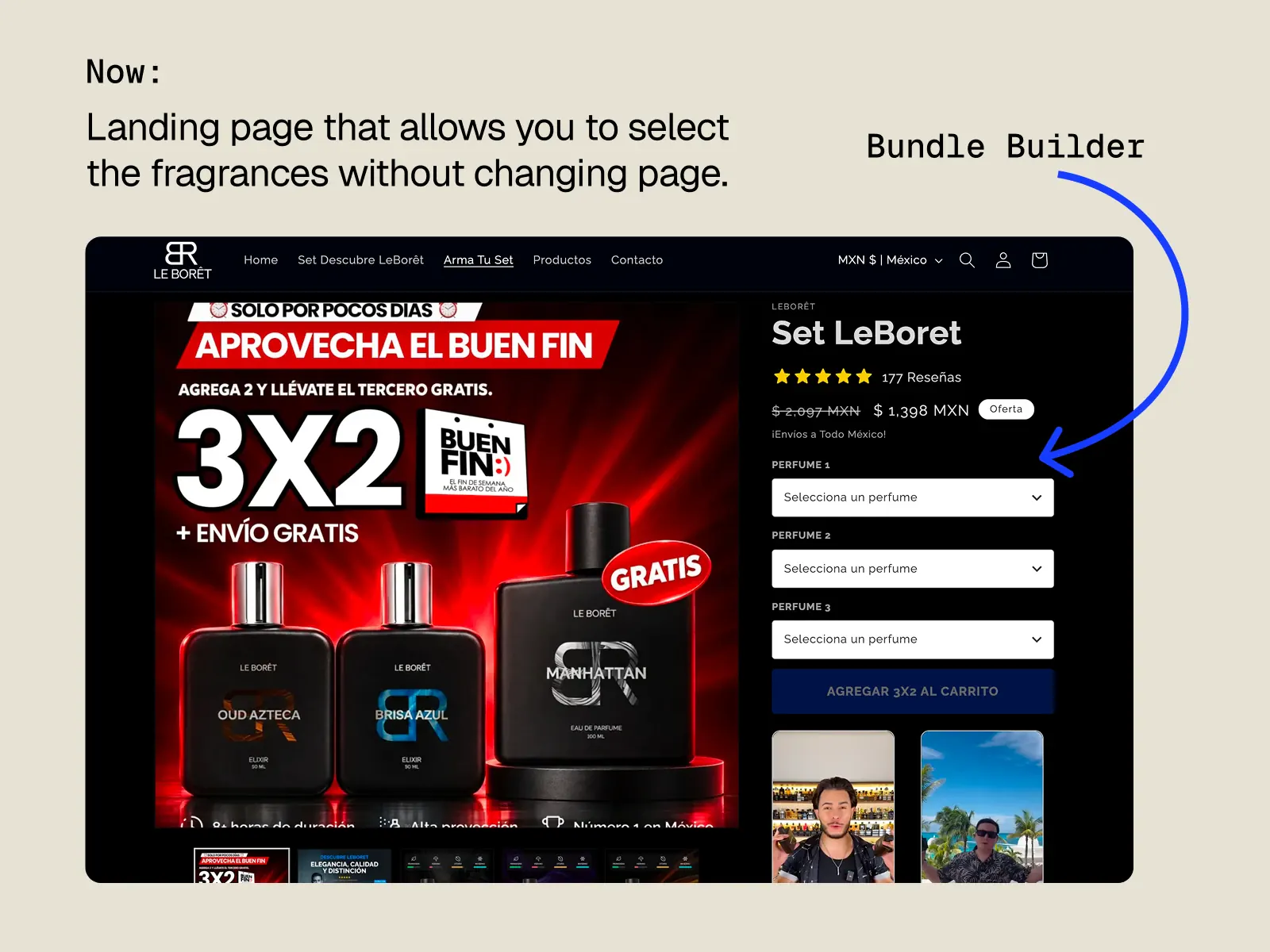
- I coded the Build your set page and the custom home sections straight into the Shopify theme, versioned on GitHub.
Process
Three steps mattered: a simpler product list with less visual load, one page where a shopper picks three fragrances, and custom home sections. Each change shipped through a GitHub-connected theme.
- A decision
- I moved the product list from a black background to a white one to lower the cognitive load.
Solution
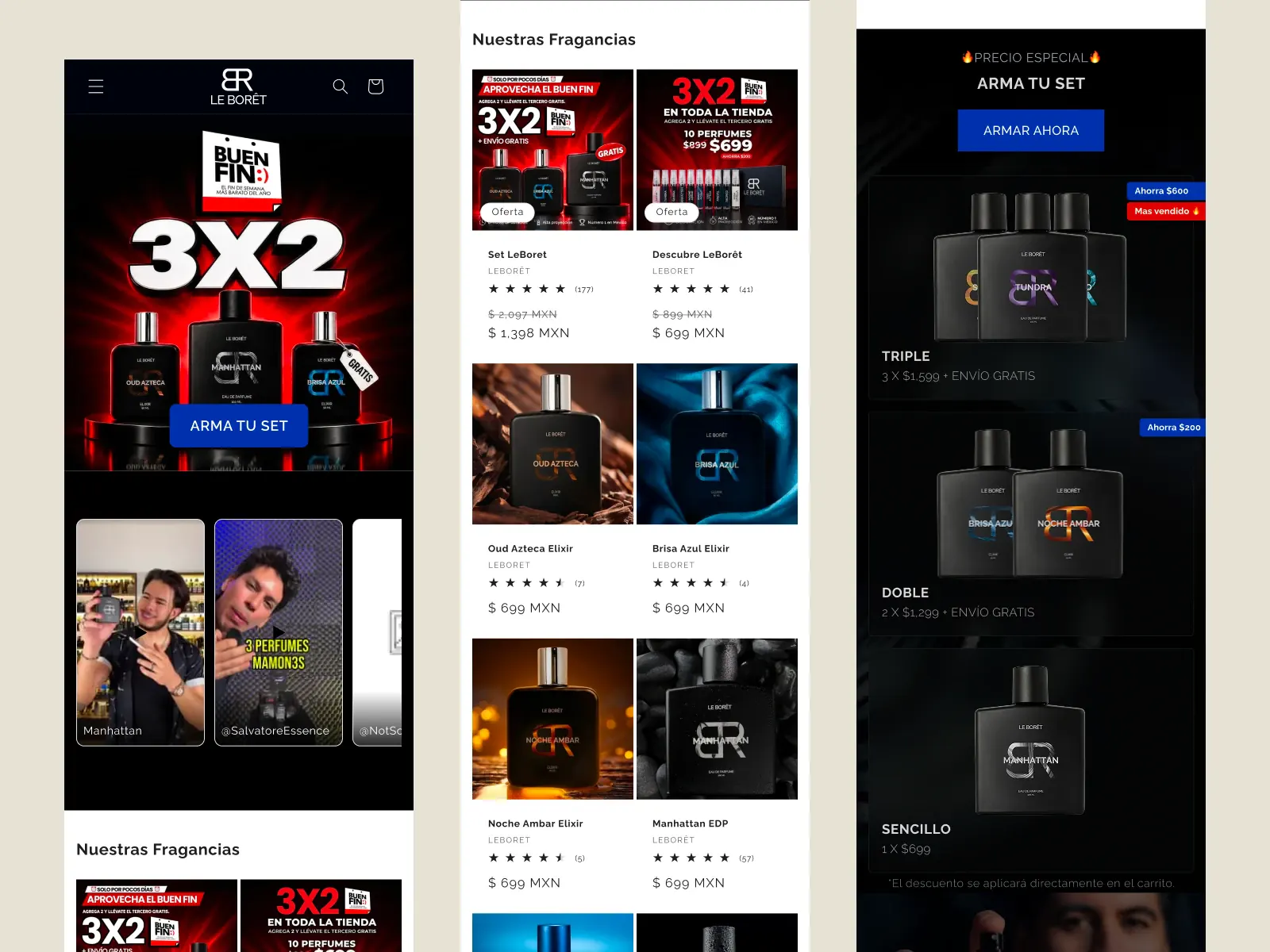
Build your set: pick three perfumes on one page, with delivery badges, shipping details and a dupes comparison. Across the store: a lighter product list, seasonal campaign banners and custom home sections.
- Phone first
- 96% of sessions are on mobile (Shopify, May to Sep 2026), so the phone is the main screen of this store.
Results
Comparing July to September 2026 with the same months of 2025, orders grew 2.9 times and net sales 3.2 times, while sessions doubled. Conversion moved from about 0.50% to about 0.68%.
- Bigger orders
- Each order also brought in 9% more in net sales (Shopify, Jul to Sep 2026 vs 2025).
- Orders, Jul to Sep 2026 vs 2025
- 2.9x
- Net sales, Jul to Sep 2026 vs 2025
- 3.2x
- Sessions, Jul to Sep 2026 vs 2025
- 2.0x
- Conversion rate
- 0.50% → 0.68%
- Net sales per order
- +9%
What I learned
I would set up before-and-after tracking before each launch. I had to rebuild the comparison from Shopify history afterward. I would again reduce a complex choice to a single page.